Rock climbing has a reputation for transforming the body — longer-looking limbs, a straighter back, an almost carved-out posture that makes climbers look taller than they actually are. So the question makes sense: can the sport itself add inches?
The short answer is no. But the longer answer is more interesting than most people expect.
Can rock climbing make you taller? Rock climbing cannot permanently increase height in adults because bones stop lengthening after the growth plates close — typically by the late teens. However, climbing regularly can decompress the spine and significantly improve posture, both of which may add a visible 0.5 to 1 inch in apparent height without changing your actual skeletal measurements.
Key Takeaways
- Adult height is fixed once growth plates close — no exercise changes that.
- Spinal decompression from hanging movements creates temporary height gains that reverse within hours.
- Postural improvements from climbing can produce a lasting visible increase in how tall you appear.
- For children and teenagers, climbing supports healthy development but cannot push growth beyond genetic limits.
- The real case for climbing is strength, mobility, and mental resilience — not inches.
How Human Height Is Actually Determined
Before getting into what climbing does or doesn’t do, it helps to understand what sets your height in the first place.
Genetics Plays the Biggest Role
Roughly 60–80% of your final height comes down to genetics, according to research published in journals tracking height heritability across populations. Your parents’ heights are the single best predictor of how tall you’ll be. That doesn’t mean environment is irrelevant — it means the ceiling is mostly genetic.
Nutrition During Childhood and Adolescence
The remaining 20–40% is largely shaped by what happens during the growth years. Protein and height growth are closely linked — adequate protein supports bone and muscle development during the critical adolescent window. Calcium and vitamin D build bone density. Sleep triggers growth hormone release, which is why teenagers who consistently get 8–10 hours tend to develop better than those who don’t. Chronic malnutrition during childhood is one of the clearest documented causes of stunted stature.
When Growth Stops
Growth plates — the cartilage zones near the ends of long bones — are the biological on/off switch for height. During childhood and adolescence, these plates allow bones to lengthen. After puberty, they calcify and close. For most people, this happens between ages 16 and 18 for girls and 18 and 21 for boys. Once those plates are closed, no exercise, supplement, or activity can make bones longer. That’s biology, not pessimism.
How Rock Climbing Affects Your Spine and Posture
Here’s where climbing gets genuinely interesting.
Spinal Decompression
Gravity compresses the spine throughout the day. By evening, most people are 0.5 to 0.75 inches shorter than they were when they woke up — the intervertebral discs slowly compress under body weight. Hanging movements, which are central to climbing, counteract this. Dead hangs and dynamic reach moves gently traction the spine, allowing discs to rehydrate and the vertebrae to spread slightly.
The result is a temporary height increase. Measurable, but not permanent. Within a few hours of returning to normal activity, compression returns and the effect reverses. This isn’t unique to climbing — it’s why astronauts return from space up to 2 inches taller, then shrink back to baseline within weeks on Earth.
Improved Posture
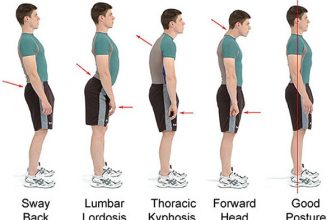
This is the part that actually sticks. Climbing builds the latissimus dorsi, trapezius, rhomboids, and deep spinal erectors — all the muscles responsible for pulling the shoulders back and keeping the spine in a neutral position. Most people spend their days hunched over desks, which shortens the anterior chain and rounds the upper back. Climbers develop the opposite pattern.
The practical result: a climber who was previously walking around with rounded shoulders and a forward head posture may visibly stand an inch taller after consistent training — not because their bones changed, but because their default position changed.
Better Body Awareness
Climbing also builds proprioception — the sense of where your body is in space. Climbers learn to distribute weight deliberately, control hip position, and move with efficiency. This translates off the wall into better postural habits throughout the day, reinforcing the visible height benefit over time.
Can Children or Teenagers Grow Taller From Rock Climbing?
For younger athletes, the question shifts slightly. Growth plates are still open. Does that change the equation?
Exercise Supports Healthy Growth
Physical activity during childhood and adolescence supports bone density, muscle development, and coordination. The American Academy of Pediatrics recommends at least 60 minutes of moderate to vigorous physical activity daily for kids aged 6–17. Climbing counts — and then some. It develops grip strength, upper-body pulling power, and spatial reasoning in ways that few other youth sports match.
What Research Says
No evidence suggests climbing increases a child’s genetically determined height potential. What the research does support is that healthy, active children tend to develop closer to their full genetic potential than sedentary ones — because adequate physical activity supports the hormonal and metabolic environment that growth requires. Climbing is excellent for that. But it won’t push a child past the ceiling their DNA set.
Nutrition and recovery still do more for height during the growth years than any specific sport.
Other Health Benefits of Rock Climbing
The height question is worth answering directly. But it arguably undersells what climbing actually delivers.
Full-Body Strength
Climbing develops grip strength, finger tendon integrity, pulling power through the back and biceps, hip flexibility, and leg drive — simultaneously. Recreational climbers at moderate grades regularly develop forearm and upper-back strength that exceeds gym lifters who train those muscles in isolation.
Mental Health Benefits
Studies on indoor climbing as a therapeutic intervention — particularly in populations with depression and anxiety — have shown meaningful reductions in self-reported stress and improvements in confidence. The problem-solving element (reading a route, deciding on sequence, adapting when a move fails) engages the prefrontal cortex in ways that passive cardio simply doesn’t. Gyms like Movement Climbing & Fitness and Brooklyn Boulders have built entire community models around this effect.
Cardiovascular Fitness
A sustained bouldering session or rope climb at moderate intensity elevates heart rate into the 130–160 BPM range for most adults — squarely in the aerobic training zone. It’s not a substitute for dedicated cardio work, but it’s not negligible either.
Common Myths About Getting Taller Through Exercise
Hanging Makes You Permanently Taller
It doesn’t. The spinal decompression from dead hangs is real, the temporary height increase is real, and the compression reverting by evening is equally real. Does hanging increase height permanently? No — and any source claiming otherwise is overstating what the evidence shows.
Stretching Increases Height
Stretching improves flexibility and can correct posture, which has the same visible effect described above. But stretching does not lengthen bones. The bones are the same length after a stretching routine as before. What changes is the position those bones sit in.
Rock Climbing Changes Bone Length
Muscles adapt to training. Tendons thicken. Posture shifts. Bone length does not change in skeletally mature adults — that’s what skeletal maturity means. Climbing builds a strong, mobile, well-aligned body. That’s the accurate claim.
Ways to Maximize Your Height Potential Naturally
For anyone still in their growth years, a few evidence-backed habits make a genuine difference.
Prioritize Quality Sleep
Growth hormone is released primarily during deep sleep. Teenagers who consistently sleep less than 7–8 hours show measurably lower GH levels. Sleep isn’t passive recovery — it’s when the actual growth happens.
Eat a Nutrient-Rich Diet
Protein, calcium, and vitamin D are the non-negotiables. Leafy greens, dairy or fortified alternatives, eggs, lean meat, and legumes cover most of the bases. Chronic undereating during adolescence is one of the most reliable ways to fall short of genetic height potential.
Stay Physically Active
Any weight-bearing physical activity — running, climbing, basketball, swimming — stimulates bone remodeling and supports the hormonal environment for growth. The specific sport matters less than the consistency.
Maintain Healthy Posture
Start now, regardless of age. Postural habits compound. A teenager who develops strong posterior chain muscles and learns to stand and sit with a neutral spine will look taller at every age than someone who doesn’t.
Avoid Smoking and Excessive Alcohol During Adolescence
Smoking during adolescence suppresses growth hormone and negatively affects bone development — the evidence on this is consistent. Alcohol disrupts sleep architecture, which reduces GH release. Both are worth avoiding during the years that actually matter for final height.
Frequently Asked Questions About Rock Climbing and Height
Can hanging from a climbing wall make you taller?
Temporarily, yes. Hanging decompresses the spine and allows intervertebral discs to expand slightly, producing a measurable but short-lived height increase — typically under an inch. By the end of the day, normal spinal compression returns.
Does bouldering affect height differently than rope climbing?
Not in any meaningful way. Both involve dynamic movement and some hanging, but neither changes bone length. The postural and spinal benefits are comparable across climbing disciplines.
Can adults gain height from climbing?
Adults can gain apparent height — through better posture and spinal decompression — but not actual skeletal height. Growth plates are closed; bones are at their final length.
Does climbing improve posture permanently?
It can, with consistent training. The back and core muscles that climbing develops counteract the postural patterns caused by prolonged sitting. But “permanent” requires maintenance — stop training and those muscles decondition over time.
Is rock climbing good for teenagers?
Yes. Climbing builds strength, coordination, bone density, and problem-solving skills during a period when all of those things benefit from stimulation. It supports healthy development without any meaningful injury risk when proper progression and supervision are in place.
Final Verdict: Can Rock Climbing Make You Taller?
Rock climbing does not permanently increase adult height. Growth plates determine when bones stop lengthening, and no exercise changes that timeline or reverses it after closure.
That said, the visible effect is real. Climbers tend to stand straighter, carry their shoulders differently, and move with a physical confidence that reads as taller — because it is, functionally. Postural changes from consistent climbing training are well within the 0.5–1 inch range that makes a noticeable difference in how height is perceived.
For children and teenagers, climbing is excellent exercise that supports healthy development — but the genetic ceiling on height stays where it is. The best a sport can do is help someone reach that ceiling, not raise it.
The honest case for rock climbing has nothing to do with height. It’s strength, mobility, mental resilience, and the unusual combination of physical and cognitive demands that makes the sport genuinely addictive. Those benefits are real, documented, and don’t require any exaggeration.