
Being tall can feel complicated, especially when you’re already taller than most of your friends and still shooting upward. Maybe your jeans never fit quite right. Maybe you bump your head on door frames more than you’d like to admit. Whatever’s driving the question, you’re not alone in wondering whether height growth is something you can actually do something about.
Here’s the honest answer upfront: for most teenagers and young adults, height growth is running on a biological schedule that lifestyle changes can’t reset. But understanding what’s actually happening in your body — and what the rare exceptions look like — helps you figure out what’s worth your attention and what isn’t.
Key Takeaways
- Height growth happens at the growth plates in your bones, and once those close, growth stops naturally.
- Genetics controls the majority of your final height — roughly 60 to 80 percent, according to most estimates.
- No food, stretch, or habit reliably stops height growth in a healthy person.
- Medical interventions to limit height do exist, but they’re rare, serious, and only used in specific clinical cases.
- If growth seems unusually rapid or you’re noticing other unusual symptoms, an endocrinologist can help figure out what’s going on.
Can You Actually Stop Growing Taller?
The short answer is: not through any lifestyle change you’ll read about on a wellness blog.
Height growth is controlled by the growth plates — thin layers of cartilage near the ends of your long bones, like the femur in your thigh and the tibia in your shin. As long as these plates stay open (meaning, they haven’t hardened into solid bone yet), your body keeps adding length. The process is driven by human growth hormone (HGH), which the pituitary gland releases in pulses, especially during sleep.
What tends to happen is that the endocrine system gradually reduces HGH output as puberty progresses, and the growth plates eventually fuse, ending the growth period entirely. This is skeletal maturity — the point where your bones are essentially finished. Once the plates are closed, no amount of diet, exercise, or supplementation changes your height. The biology just doesn’t allow it.
Medical intervention to intentionally close the growth plates early does exist, but it’s genuinely rare. Doctors consider it only when growth is so excessive that it poses real health or quality-of-life concerns. It’s not a casual option, and no responsible physician would pursue it without serious clinical justification.
What Determines How Tall You Become?
Think of your final height as a destination your body is navigating toward from birth. The route is influenced by a handful of major forces.
Genetics does the heaviest lifting. If both your parents are tall, the odds strongly favor you ending up on the taller side. If one parent is average-height and the other is tall, you’ll likely land somewhere in between. There are formulas pediatricians use — often called mid-parental height calculations — that estimate a child’s likely adult height based on parental heights. They’re rough, but they’re usually in the ballpark.
Hormones play the executive role. The pituitary gland produces HGH, which signals the bones to grow. During puberty, a surge in sex hormones — estrogen and testosterone — accelerates growth and eventually triggers growth plate closure. Any condition that disrupts this hormonal process, whether it’s underproduction or overproduction, can affect final height.
Childhood nutrition matters more than most people realize, especially in the early years. Adequate protein, calcium, vitamin D, and overall caloric intake during development directly affects bone health and growth potential. This doesn’t mean a well-nourished teenager can somehow “eat their way taller” — but it does mean that poor nutrition during critical windows can limit a child from reaching their genetic potential.
Overall health during development is the quieter factor. Chronic illness, certain medications, and prolonged stress can all interfere with the body’s natural growth trajectory, sometimes resulting in shorter-than-expected stature.
At What Age Do Most Americans Stop Growing?
Growth timelines vary more than people expect, but there are patterns worth knowing.
For girls, puberty typically begins between ages 8 and 13. The fastest growth — the growth spurt — usually happens early in puberty, often around ages 10 to 12. Most girls stop growing around age 14 to 16, though some continue growing slightly until 18.
For boys, puberty tends to start a couple of years later, roughly between ages 9 and 14. The growth spurt peaks around ages 13 to 15. Most boys stop growing between 16 and 18, but it’s not unusual for growth to continue into the early 20s for some.
What that table looks like side by side:
| Factor | Girls | Boys |
|---|---|---|
| Puberty onset (typical range) | Ages 8 to 13 | Ages 9 to 14 |
| Peak growth spurt | Around ages 10 to 12 | Around ages 13 to 15 |
| Growth usually stops | Ages 14 to 16 | Ages 16 to 18 |
| Late growth possible until | Age 18 | Early 20s |
| Growth plate closure | Earlier on average | Later on average |
The key insight here isn’t the exact ages — it’s the range. Boys on the later end of the puberty spectrum might still be gaining height at 19 or 20. Girls who hit puberty early might be essentially done growing by their freshman year of high school. Bone age assessments (an X-ray of the hand and wrist that a radiologist reads) are the most reliable way to figure out where someone actually is in the growth timeline, independent of their calendar age.
Signs You Are Still Growing Taller
Your body usually gives you readable signals when growth is still active.
The most obvious one is a measurable increase in height over a short period — say, an inch or more in a few months. Outgrowing shoes faster than expected is another one, since foot growth tends to accompany height growth. Clothes that fit fine six months ago suddenly being too short in the arms or legs is a familiar sign for a lot of teenagers.
Ongoing puberty changes — voice deepening in boys, breast development in girls, body hair becoming more prominent — generally indicate the growth plates are still open. Growth and puberty are running on the same timeline, more or less.
If there’s genuine uncertainty about whether growth is still active, a pediatrician can order a bone age X-ray. This gives a clearer picture than any symptom checklist. Growth velocity assessments — tracking how much height is gained over a set period — are also useful tools in a clinical setting.
Medical Conditions That Can Cause Excessive Height Growth
For most people, being tall is simply a genetic outcome. But in some cases, unusually rapid or extreme height growth is a signal worth investigating.
Gigantism happens when the pituitary gland produces too much HGH during childhood, before the growth plates have closed. The result is abnormal height gain, often accompanied by enlarged hands, feet, and facial features. It’s rare, but it’s real.
Acromegaly is the adult version — excess HGH production after the growth plates have already fused. Since the long bones can’t lengthen anymore, the excess hormone affects soft tissue and facial bones instead, causing distinctive changes in appearance over time.
Both conditions are usually linked to a pituitary tumor. They require diagnosis by an endocrinologist and may be treated through surgery, radiation, or medication to normalize hormone levels.
If growth seems far outside the normal range, if it’s happening unusually fast, or if it’s paired with other symptoms like headaches, vision changes, or joint pain, that’s worth a conversation with a doctor rather than a wait-and-see approach.
Does Exercise, Diet, or Sleep Affect Height Growth?
There’s a lot of noise around this topic, so it’s worth being direct.
Exercise supports healthy bone development and overall physical health. Weight-bearing activities like running, jumping, and strength training are genuinely good for growing bodies. But there’s no evidence that any specific exercise stops or meaningfully reduces height growth in a healthy person.
Diet plays a role in whether someone reaches their genetic height potential — not in whether they exceed it. Getting enough protein, calcium, and vitamin D during the growth years matters for bone density and development. Eating an unusually restrictive diet won’t stop you from growing taller; it’s more likely to create deficiencies that cause other problems.
Sleep is where things get interesting. HGH is released in significant pulses during deep sleep. Consistently poor sleep does affect hormone regulation over time. But this cuts both ways — poor sleep isn’t a strategy to limit growth, and framing it that way misses the point entirely.
The honest bottom line: lifestyle habits support or undermine healthy development, but they don’t work as levers to control final height. Anyone suggesting otherwise is selling something.
Medical Treatments Used to Limit Height Growth
This section is for the genuinely small percentage of people for whom height growth has become a serious medical or psychosocial concern.
High-dose estrogen therapy has historically been used to accelerate growth plate closure in girls predicted to reach an unusually tall adult height — typically defined as 6 feet or above. By flooding the body with estrogen earlier than puberty would naturally provide it, the treatment speeds up the closure timeline and reduces the amount of additional height gained. It’s been used since the 1950s, though its use has declined significantly as understanding of the risks has improved.
The side effects are real and documented: nausea, blood clots, fertility concerns, and long-term bone density effects. Some studies have also noted psychological impacts.
Testosterone therapy has been used in boys with similar predicted heights, though the evidence base is thinner and the use even less common.
Surgical interventions to physically affect the growth plates exist but are essentially limited to corrective orthopedic procedures for conditions like leg length discrepancy — not height reduction in otherwise healthy individuals.
Anyone considering these options needs to be under the care of a qualified endocrinologist and, likely, a multidisciplinary team. These aren’t casual decisions. The ethical considerations around performing interventions on otherwise healthy teenagers are significant, and medical opinion on the topic has shifted considerably over time.
How to Feel More Comfortable Being Tall
This part of the conversation doesn’t get enough attention.
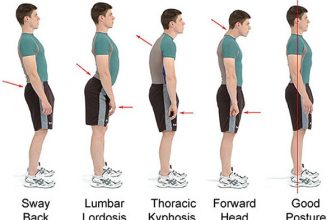
If you’re a teenager who’s already taller than most of your classmates and you’re spending energy worrying about it, the most practical shift is recognizing that the discomfort is often more about how you carry yourself than how tall you actually are. Posture makes a visible difference — not in your actual height, but in how you take up space and how confident you appear.
Clothing fit is genuinely underrated. Clothes that fit well make tall people look intentional and put-together. Clothes that are too short in the legs or sleeves just highlight the height in a way that tends to feel awkward. Many brands now cater specifically to tall sizing, and the difference in how you feel wearing something that actually fits is significant.
The psychological piece matters too. Feeling self-conscious about height is common in adolescence. Talking to a counselor or therapist about body image concerns is a reasonable step, especially if the anxiety is affecting daily life. Most people who are tall in adulthood don’t view it as a problem — but getting from “this feels awkward right now” to “I’m fine with this” takes time and usually some intentional mindset work.
Frequently Asked Questions About Stopping Height Growth
Can stretching make you taller?
Stretching improves posture and spinal flexibility, which can give the appearance of a slightly taller, more upright stance. It doesn’t affect bone length or growth plate activity.
Can certain foods stop growth?
No. Food choices influence whether someone reaches their genetic height potential, but no food accelerates or slows growth plate closure in a healthy person.
Can you stop growing after puberty starts?
Puberty and growth are linked. Once puberty is complete and the growth plates have fused, growth stops naturally. There’s no reliable way to accelerate that process through lifestyle changes.
How do doctors know growth plates are closed?
An X-ray of the hand and wrist — a bone age study — allows a radiologist to assess whether the growth plates have fused. It’s straightforward and widely available.
Is being very tall a medical problem?
For most people, no. Tall stature on its own isn’t a health condition. If height is extreme, growing unusually fast, or accompanied by other symptoms, it warrants a medical evaluation to rule out conditions like gigantism or a pituitary abnormality.
Final Thoughts on How To Stop Growing Taller
Most of the time, height growth isn’t something you can meaningfully intervene in — and that’s actually fine. The biology is doing what it’s supposed to do, running through a process determined mostly by genetics and hormones that will wrap up on its own schedule.
Lifestyle habits matter for general health and for reaching your genetic potential. They’re not tools for adjusting that potential up or down. Medical interventions to limit height exist, but they’re rare, come with real risks, and are only appropriate in specific clinical contexts with specialist oversight.
If growth seems unusually rapid, if you’re noticing symptoms beyond just getting taller, or if a pediatrician has flagged something worth investigating, an endocrinologist is the right person to consult. Otherwise, the most practical focus is on staying healthy, getting good sleep, eating well, and — genuinely — making peace with where you’re landing physically.
Height doesn’t have to be something that happens to you. For most people, with a little time and perspective, it just becomes part of who you are.