
At some point, you’ve probably found yourself squinting at a growth chart—maybe late in the evening, maybe with a drink you forgot about cooling beside you—asking when girls actually stop growing, and whether what’s happening right now even makes sense. That moment tends to show up quietly. Often around puberty. One year brings a sudden jump in height. The next feels oddly still. That contrast alone can make anyone uneasy. And here’s the part that trips people up: female growth does follow a biological timeline, but it rarely behaves as neatly as the charts suggest.
What’s really happening is a layered interaction between timing and biology. Puberty onset, hormone shifts, and growth plate closure all overlap, sometimes cleanly, sometimes not at all. Some girls slow down earlier than expected. Others keep adding small increments well past the age everyone talks about. That unpredictability explains why pediatric checkups and adolescent health visits matter so much—they help separate normal variation from the moments that actually deserve attention. Confusion often comes from assuming there’s one “correct” schedule. There isn’t.
Before overreacting in either direction, it helps to walk through female growth stages and the typical age when height levels off, step by step, grounded in real patterns rather than tidy diagrams.
What Is the Average Height for Women in the U.S.?
At some point, most people stand in front of a mirror and silently wonder whether they’re tall, short, or somewhere in between. That question feels personal, but the data behind it is surprisingly stable. According to the CDC’s National Center for Health Statistics, adult women in the United States average 5 feet 3.8 inches tall (64 inches), based on measurements from women aged 20 and older. That number has barely shifted in two decades, which still catches many people off guard.
When height data is broken down by age, small changes appear over time. Those changes matter—but not in the dramatic way people tend to assume. Minor declines after age 40 usually reflect posture shifts, bone density changes, and daily wear on the spine rather than sudden height loss. Bodies adapt. Gravity has a say.
A few grounding perspective checks tend to help when numbers start feeling personal:
- Being under 5’4″ doesn’t place anyone “below” average—average functions as a range, not a judgment
- Posture alone can change how tall you appear, especially after years of desk work or phone scrolling
- Height reflects genetics, nutrition, health history, and daily habits, not just a single measurement
So when door frames or charts become reference points, it’s worth pausing. Numbers explain part of the picture. The rest comes from context.
Factors That Affect a Woman’s Height
Height often gets framed as genetic destiny. Tall parents mean tall kids. Short parents mean the opposite. That explanation sticks because it’s simple—but it leaves out most of the story. In reality, genetics create a window, not a guarantee. What fills that window depends on timing, health, and environment.
Several factors consistently shape how tall you end up:
- Genetics: Family DNA provides a potential range, not a fixed outcome. Even siblings with shared genetics can end up several inches apart, depending on timing and health during growth years.
- Nutrition during childhood and adolescence: Protein intake, calcium, vitamin D, and overall calorie availability play a major role while growth plates are open. Gaps during those years matter more than people realize, and they’re common.
- Childhood health patterns: Frequent illness, chronic inflammation, or poor nutrient absorption can slow growth temporarily—or permanently—if they occur during critical growth phases. Timing makes the difference.
- Hormonal changes: Estrogen regulates when growth plates close. Earlier puberty often leads to an earlier stop in height gain. That pattern reflects biology, not personal failure or lifestyle choices.
- Ethnicity and genetic background: Population averages differ globally, and mixed genetic backgrounds can widen individual variation. “Average” shifts depending on context.
The takeaway is simple but often overlooked: height isn’t something you failed to achieve. It’s the result of layered influences interacting over time.
How U.S. Women’s Height Compares Globally
Height can feel fixed—until geography changes. Step into a different country and the same body suddenly reads differently. Context reshapes perception faster than any statistic.
Based on recent World Health Organization and OECD data, here’s how height compares internationally and how it tends to feel on the ground:
- Netherlands (~5’7″ / 170 cm): Many visitors feel noticeably shorter here unless they’re already tall. Dutch women consistently rank among the tallest globally, a combination of genetics and long-term nutritional patterns.
- United States (~5’4″ / 163 cm): Squarely middle-of-the-pack. Regional differences matter, and so do social circles, which explains why “average” can feel inconsistent.
- United Kingdom (~5’4.5″ / 164 cm): Slightly taller on paper than the U.S., though the difference rarely registers in daily life.
- Japan (~5’2″ / 158 cm): Taller individuals often stand out here, especially above 5’4″. Clothing fit becomes noticeably easier for some.
- Global average (~5’3″ / 160 cm): U.S. averages land slightly above the global midpoint.
Height doesn’t carry a single meaning. Culture, environment, and comparison constantly reshape it.

Height Trends Over Generations
Old family photos tend to trigger double takes. Everyone looks smaller. That reaction isn’t imagination—it’s history showing up quietly.
Across the 20th century, average height increased rapidly, particularly from the 1930s through the 1970s. Better access to calories, protein, dairy, and healthcare unlocked growth potential that earlier generations never reached. Improvements in clean water, vaccination, and routine pediatric care played a major role, all documented through long-term CDC and national health records.
Then something interesting happened. Growth slowed.
In recent decades, average height for U.S. women has largely plateaued around 5’4″. Lifestyle shifts appear to be part of the story—higher stress levels, sedentary routines, and ultra-processed diets may be offsetting earlier gains. Progress didn’t reverse, but it stopped accelerating.
So when height mirrors that of mothers or grandmothers, it isn’t stagnation. It’s participation in a much longer biological timeline.
How Height Affects Health and Lifestyle
Height rarely announces itself, but it shapes daily experience in subtle ways. Chairs hit differently. Countertops land at awkward angles. Long walks feel different in the joints.
Several health-related patterns tend to show up:
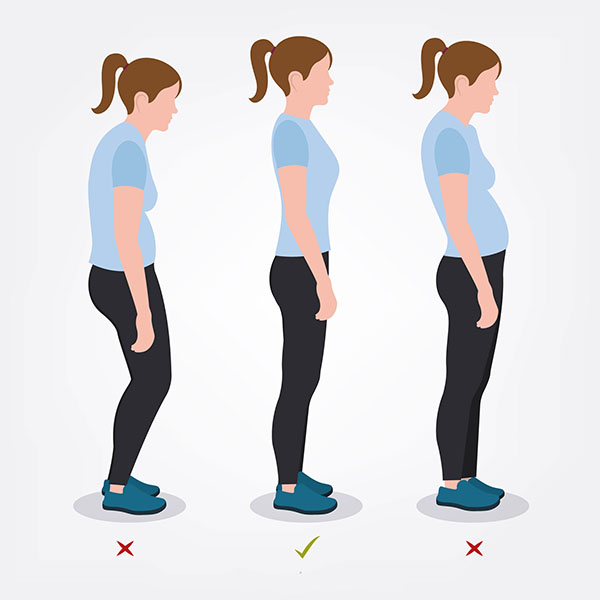
- Posture and spinal alignment: Taller frames often encourage unconscious slouching, partly habit, partly social adaptation. Over time, that strains the upper back and neck. Shorter frames may overreach more often, leading to shoulder or hip tension.
- Bone health: Shorter women carry a slightly higher osteoporosis risk, while taller women place more mechanical stress on joints. In both cases, bone density support through calcium, vitamin D, and resistance training plays a protective role.
- BMI and fitness interpretation: Body mass index scales poorly with height. Two women at the same weight can move and feel entirely different. Body composition offers clearer insight than the number alone.
- Athletic leverage: Limb length influences movement efficiency. Longer limbs favor reach and stride. Shorter builds often excel in balance, stability, and endurance-based activities.
Height isn’t a limitation. It’s a physical framework. Once understood, habits and movement patterns can work with it instead of against it.
Fashion, Dating & Social Impacts of Female Height
Height rarely dominates conscious thought, yet the world reflects it constantly. Dressing rooms, dating profiles, and offhand comments all carry quiet reminders.
Common patterns tend to surface:
- Clothing inconsistencies: Tall women often struggle with sleeve and inseam length, especially after laundering. Shorter women face excess fabric even in petite sizing. Tailoring becomes a routine expense rather than a luxury.
- Shoe sizing challenges: Larger or smaller foot sizes narrow options quickly, forcing compromises that have nothing to do with style preference.
- Dating app bias: Height often appears as a listed credential. Taller women may be labeled “intimidating.” Shorter women sometimes get framed as delicate or childlike. Neither description captures reality.
- Social stereotypes: Expectations around confidence, dominance, or approachability often hinge on inches instead of personality.
Bias exists whether it’s acknowledged or not. What tends to matter more is posture, presence, and how comfortably someone occupies their space. Those qualities register faster than measurements.
- Related post: How to Grow Taller at 15?