
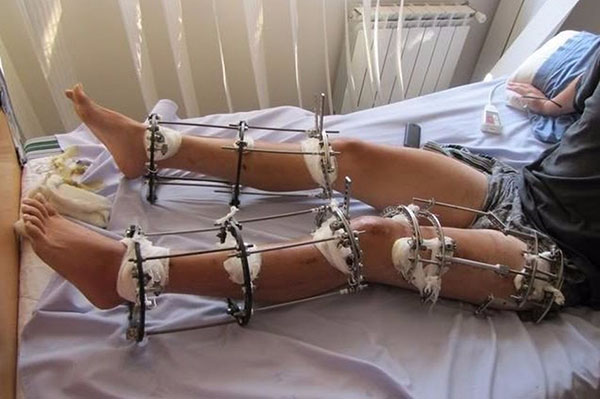
Most people still picture leg lengthening surgery as something extreme — rare, maybe even fringe. That image is outdated. Across the United States today, you’ll find this procedure used for genuinely different reasons: one patient correcting a leg length imbalance after a serious injury, another pursuing additional height because of how stature has shaped their confidence, career opportunities, or just the subtle way they navigate social spaces.
The conversation around this topic gets flattened too easily. Either it’s framed as some miracle solution or dismissed as pure vanity. Neither view holds up once you look closely. What you’re actually dealing with is a serious orthopedic procedure, a demanding recovery, a significant financial commitment, and an outcome that can genuinely shift things — though not quite in the tidy, time-lapse way clinic brochures suggest.
Key Takeaways
- Leg lengthening surgery can add roughly 2 to 6 inches depending on whether the femur, tibia, or both segments are targeted. The number sounds impressive at first — then the recovery reality starts to weigh more heavily than the math.
- U.S. clinics commonly use systems like the PRECICE nail or the LON technique, both rooted in the older Ilizarov principle of growing new bone through a gradually controlled gap.
- Cosmetic procedures in the U.S. typically run between $70,000 and $150,000 or more — and that “or more” isn’t fine print. Rehabilitation costs, travel, and lost income time can push the total considerably higher.
- Recovery generally spans 6 to 12 months, sometimes longer, with daily physical therapy playing a much bigger role than most patients anticipate going in.
- The main complications to understand include infection, nerve irritation or injury, blood clots, joint stiffness, and slow bone consolidation.
- A board-certified orthopedic surgeon with actual limb reconstruction experience isn’t a luxury — it meaningfully changes your risk profile.
What Leg Lengthening Surgery Actually Is
Leg lengthening surgery gradually increases the length of your femur, your tibia, or in some cases both. The surgeon cuts the bone, then slowly separates the two ends so your body fills the gap with new bone tissue. That process has a clinical name — distraction osteogenesis — but what matters more is how it actually shows up in daily life: small daily adjustments, incremental progress, and a recovery pace that tests patience more than pain tolerance on most days.
The modern version is more refined than what most people imagine. The technique traces back to Dr. Gavriil Ilizarov in the 1950s, when external frames handled most of the mechanical work. U.S. surgeons now often rely on internal systems that make the experience less cumbersome and considerably less visually dramatic.
Two names come up most often:
- PRECICE nail
- LON technique
The PRECICE nail is an internal lengthening nail placed directly inside the bone. The LON technique — short for lengthening over nail — combines internal and external support. This is roughly where people start recognizing how much the field has evolved. It’s not the old external-frame image anymore, though external devices still appear in certain cases depending on the patient and the surgeon’s approach.
Why You Might Consider It
In the U.S., the reasons usually split into two broad categories: medical correction and cosmetic height increase. But even that split gets complicated once you look past the surface.
Medical reasons
You may be dealing with:
- A limb length discrepancy following trauma
- A congenital difference in leg length
- A condition such as achondroplasia
- A post-fracture issue that healed asymmetrically
In these situations, surgery is primarily about restoring function. Walking symmetry. Hip alignment. Reduced strain on the back over time. Insurance may cover medically necessary cases, though the approval path tends to be tedious and paperwork-heavy — which catches a lot of patients off guard.
Cosmetic height increase
This is the part people still tend to speak about carefully, even now. Some patients want to be taller because height has tangibly shaped how they’ve been treated socially or professionally. In fields like acting, modeling, or certain sales environments, appearance affects access in ways that don’t always get said out loud.
The table below helps clarify how these two groups compare.
| Reason for surgery | What it usually aims to fix | Insurance status in the U.S. | Common emotional driver | Quick code |
|---|---|---|---|---|
| Medical limb correction | Uneven gait, pain, imbalance, functional loss | Sometimes covered | Relief and physical normalcy | LL-M01 |
| Dwarfism-related treatment | Proportion, mobility, reach, daily function | Sometimes covered in part | Independence and function | LL-M02 |
| Cosmetic height increase | Short stature without medical defect | Rarely covered | Confidence, image, identity | LL-C01 |
| Post-trauma reconstruction | Bone loss or asymmetry after injury | More likely covered | Restoration after disruption | LL-M03 |
What tends to get overlooked is that the emotional weight runs deep in both groups. Cosmetic patients are often dismissed too quickly, but medical patients are sometimes assumed to have an easier or more obvious decision. In practice, they usually don’t. Different reasons — same difficult road.
For broader context, the average U.S. adult height sits around 5 feet 9 inches for men and 5 feet 4 inches for women, according to CDC data. Those numbers don’t tell you how you feel inside your own body, but they do shape the social backdrop that most people measure themselves against, consciously or not.
How the Procedure Works, Step by Step
The process sounds straightforward when it’s described on paper. Living it is a different experience entirely.
First, the surgeon performs an osteotomy — essentially a controlled, precise bone cut. A lengthening device is then placed inside or around the bone. After a brief waiting period, the distraction phase begins. That’s when the bone ends are gradually separated, creating the space where new bone grows.
Most patients lengthen at roughly 1 millimeter per day — about 0.04 inches daily, which sounds painfully slow until the weeks stack up. Over time, that pace can produce 2 to 3 inches per bone segment.
Most procedures in the United States take place under general anesthesia at accredited hospitals or specialized orthopedic centers. That part is fairly standard. What’s less standard is how completely the daily adjustment routine takes over your life afterward. Tracking progress, managing tight muscles, staying consistent with your device — that becomes the real story for a while.
Recovery Timeline: The Part People Underestimate
Here’s the thing about this surgery: the operation itself is a single event. Recovery becomes your full-time situation.
A typical timeline looks roughly like this:
- 3 to 4 months of active lengthening
- 3 to 6 months of consolidation while the new bone hardens
- Daily physical therapy, often running for many months
And daily really does mean daily in most cases. Not optional stretching when the motivation is there. Structured, repeated, necessary work.
This tends to be the point where people realize the process is slower than their initial picture of it. Bone can grow, but muscles, tendons, nerves, and joints don’t always cooperate at the same rate. That mismatch — that gap between bone progress and soft tissue adaptation — is where a lot of the real struggle lives. Tightness becomes a constant presence. So does fatigue, in a way that’s hard to fully explain until you’re in it.
In major U.S. cities like New York, Los Angeles, and Dallas, outpatient rehab networks are generally easier to coordinate, though that convenience comes with higher pricing attached. Some patients manage to work remotely during recovery, and the post-COVID shift toward flexible work has made that more realistic than it once was. Still, “working during recovery” can sound a lot more manageable than it actually feels when your body is essentially running a construction project around the clock.
Cost in the United States
This is where the numbers get blunt fast.
Most leg lengthening surgeries in the U.S. fall somewhere between $70,000 and $150,000 USD, sometimes more. The final figure depends on the surgeon, the city, the device selected, the lengthening goal, and how complex your particular case turns out to be.
That cost typically includes:
- Surgeon fees
- Hospital and facility charges
- The implanted device, such as a PRECICE nail
- Initial physical therapy
- Follow-up appointments
Here’s a practical breakdown of where the money tends to go.
| Cost area | Typical U.S. range | What it usually includes | Worth knowing | Code |
|---|---|---|---|---|
| Surgeon fee | $20,000–$40,000 | Planning, surgery, follow-up | This is often where real expertise shows up — and cheaper doesn’t always mean cheaper in the long run | COST-01 |
| Hospital/facility fee | $15,000–$35,000 | OR time, anesthesia support, inpatient care | Big-city hospitals push this number up quickly | COST-02 |
| Device cost | $15,000–$25,000 | PRECICE nail or similar hardware | Internal systems cost more upfront — many patients find the comfort trade-off worthwhile | COST-03 |
| Physical therapy | $5,000–$20,000+ | Early rehab through longer-term mobility work | People underbudget here consistently — it’s one of the more common financial surprises in recovery | COST-04 |
| Travel/lodging/lost work time | $5,000–$30,000+ | Flights, accommodations, meals, missed income | This hidden layer often stings more than the headline surgical quote | COST-05 |
Cosmetic cases are rarely covered by major insurers like Blue Cross Blue Shield. Medical loans, clinic payment plans, and personal savings tend to be the realistic funding paths. At this price level, the financial planning matters almost as much as the clinical planning.
Risks and Complications
No version of this surgery is without risk, even with an excellent surgeon and a well-run facility.
The most common complications include:
- Infection
- Nerve injury or ongoing nerve irritation
- Blood clots
- Delayed bone healing
- Joint stiffness
What often gets missed is that complications don’t always arrive as sudden, dramatic events. Sometimes they creep in as stalled progress, stubborn pain, reduced range of motion, or rehab that simply stops moving forward the way everyone hoped. That slower, grinding kind of difficulty can wear you down in ways that are harder to anticipate in advance.
Careful screening lowers the risk picture. Surgeon experience lowers it further. Not perfectly — but meaningfully.
Who Tends to Be a Good Candidate
You’re more likely to qualify if you’re in solid overall health, don’t smoke, and can genuinely commit to a long rehab window. That last part matters more than most people initially give it credit for. The core question isn’t just whether you can tolerate surgery. It’s whether you can tolerate months of repetition, slowness, and not living quite normally.
Psychological screening is standard practice in cosmetic cases. That makes sense — not because the desire for additional height is trivial, but because the process is genuinely intense and the emotional payoff isn’t always immediate. Some people assume the added inches will resolve a lot of long-standing insecurities. Then recovery stretches on, and the feelings get more layered than expected.
Choosing the Right U.S. Surgeon
When comparing surgeons, a few things tend to matter most in practice:
- Board certification through the American Board of Orthopaedic Surgery
- Fellowship training specifically in limb reconstruction
- Documented before-and-after cases from real patients
- Clear, itemized pricing in USD
- A serious rehab plan — not just polished surgical marketing
Major metro areas tend to have more specialists, though traveling to the right surgeon is common and often worthwhile. Pay close attention to how a surgeon discusses complications and physical therapy. A surgeon who focuses entirely on the upside and glosses over difficulty is worth approaching with caution.
Alternatives Before You Commit
Sometimes the better move is not surgery. At least not yet.
Worth considering first:
- Shoe lifts
- Posture training and structural alignment work
- Counseling or therapy specifically for body image concerns
None of those will add inches to your bones. But they also won’t require general anesthesia, a year of recovery, or six-figure spending. For some people, sitting with that comparison for a while changes the whole calculation.
Is It Worth It?
That depends heavily on your specific reason for pursuing it and which parts of the trade-off you can realistically absorb. For medical correction, the value can be significant — you’re restoring balance, function, and physical comfort that affects daily life in tangible ways. For cosmetic height increase, the result can genuinely improve confidence, but the path there is expensive, invasive, and quietly demanding in ways that don’t always come through in polished clinic photography.
So yes, it can absolutely be worth it. And no, that answer doesn’t land the same way for everyone.
When you’re this deep into the decision, the most useful next step tends to be less about hype and more about specifics: more than one surgical consultation, a clear and detailed rehab plan, full pricing laid out in writing, and an honest look at how much disruption your life can genuinely handle over 6 to 12 months. That’s usually where the real decision reveals itself.