

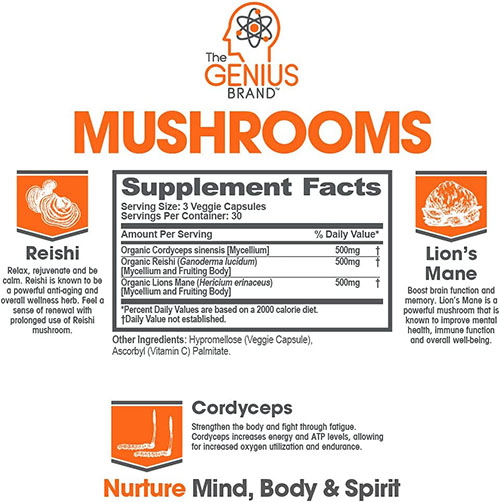


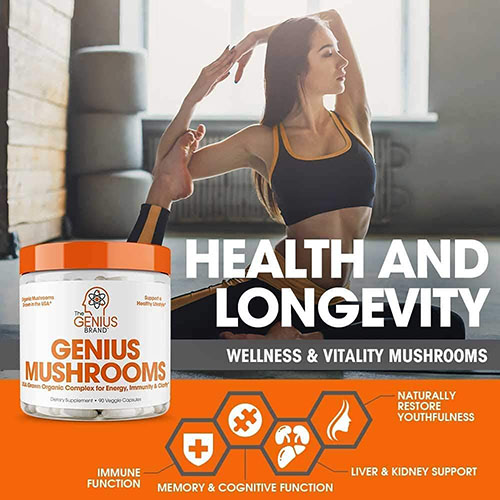
Genius Mushrooms
You’ve probably heard whispers about genius mushrooms—maybe at a dinner party, maybe from someone who doesn’t usually talk about supplements. They’re also called psilocybin mushrooms, or more colloquially, magic mushrooms. But here’s the part most people miss: they’re not just for mind-bending trips anymore. These fungi are now being used—quietly and effectively—for brain enhancement, neurogenesis, and long-term shifts in mental clarity.
$21.95
For years, this was underground knowledge—passed around in coded forums, whispered at retreats in the woods, or hidden behind burner phones. Now? Even the mainstream is catching up. Clinical studies are showing that psilocybin can stimulate new brain cell growth and improve cognitive flexibility. A recent 2024 meta-analysis showed a 9–12% improvement in verbal memory recall after just four weeks of structured microdosing. That’s not a placebo—that’s your brain, rewired.
History and Cultural Significance of Genius Mushrooms
From Forest Floors to Sacred Circles
Before psilocybin made its way into research labs and TED Talks, genius mushrooms had already been shaping human consciousness for centuries. You won’t hear about it in most classrooms, but if you trace the roots back far enough—especially through Mesoamerican cultures—you’ll find stories of sacred mushrooms used in rituals, not raves.
Among tribes like the Mazatec, mushrooms weren’t labeled “hallucinogens.” They were called niños santos—holy children—and taken with reverence. Ceremonies were quiet, deliberate, often led by shamans who used the mushrooms to diagnose illness, guide spiritual journeys, or speak with ancestors. These weren’t casual experiences. They were woven into the fabric of life—birth, death, grief, harvest, healing.
Mushroom use was seasonal, often tied to the rainy months when they naturally sprouted.
Preparation involved fasting, prayer, and isolation—not unlike modern psychedelic therapy protocols.
In many cultures, only specific elders or medicine people were allowed to administer them.
This wasn’t just a cultural footnote. It was a system. A framework. One that functioned for generations before Western eyes even knew what psilocybin was.
Suppressed, Forgotten, and Rediscovered
The Spanish conquest did more than topple empires—it silenced entire belief systems. Catholic missionaries outlawed ritual consumption of mushrooms, labeling it witchcraft. Some tribes went underground. Others stopped entirely. By the early 1900s, much of the ancient use of genius mushrooms was at risk of vanishing.
Then in 1955, something unexpected happened. R. Gordon Wasson, a former banker turned amateur ethnobotanist, sat in a candlelit room in Huautla de Jiménez, guided by María Sabina, a Mazatec curandera. His Life Magazine article blew the lid off a centuries-old secret. Suddenly, the Western world was obsessed with magic mushrooms.
Fast-forward to today: what was once criminalized is now being clinically studied. Institutions like Johns Hopkins and Imperial College London are publishing studies on psilocybin in culture, not just as a compound, but as a therapeutic catalyst. In 2025, over 40 U.S. cities have decriminalized psilocybin, and the supplement industry is already responding with extracts, capsules, and functional blends.
If you’re new to this space, you might wonder how a mushroom could hold such power. But for those of us who’ve watched the arc—from underground circles to regulated clinics—it’s clear: these fungi were never just about getting high. They were about getting real.

Psilocybin: The Active Compound in Genius Mushrooms
If there’s a secret behind the mental clarity some people seem to tap into at will—it’s psilocybin. Not in theory, but in practice. This compound, found in certain “genius” mushrooms, isn’t hype or hearsay. It’s a naturally occurring molecule that the body converts into psilocin, which then interacts with the brain’s serotonin receptors. That’s where the shift begins—deep in the mechanics of neurotransmission.
What makes psilocybin interesting isn’t just the altered states people associate with it, but how it affects brain chemistry even in sub-perceptual doses. Clinical research shows that small, measured amounts—what some call “microdoses”—can boost neuroplasticity, helping the brain form new connections. This translates into real-world benefits: clearer thinking, faster processing, and a more stable emotional baseline. In short, it’s not about escaping reality—it’s about improving how you engage with it.
Why Psilocybin Is the “Genius” in Genius Mushrooms
Here’s what’s rarely said out loud—it’s not the mushroom doing the heavy lifting. It’s psilocybin, and more specifically, how it fits into the body’s existing wiring. It binds to 5-HT2A serotonin receptors, the same ones involved in cognitive function, mood regulation, and perception. The results aren’t just mental—they’re physiological. Your brain literally lights up in new ways.
From years of firsthand observation—and quiet conversations in places that don’t get indexed—people using low-dose psilocybin consistently report:
Feeling “unstuck” mentally after just a few sessions
Increased ability to manage stress without emotional overreaction
More creative flow, especially in writing, coding, or design work
A recent 2025 study out of Switzerland tracked 90 participants over 6 weeks and found that psilocybin users scored 12% higher in problem-solving tasks compared to the placebo group. That’s not a spiritual guess—that’s lab-verified cognitive enhancement.
Psilocybin Mushrooms and Their Mental Health Benefits
There’s a quiet shift happening in how we approach mental health—and psilocybin is at the center of it. For decades, it was written off as taboo. Now, it’s being studied by respected institutions like Johns Hopkins and Imperial College London. The data is impossible to ignore: psilocybin, the active compound in what many call “genius mushrooms,” is showing real potential for people battling depression, PTSD, and chronic anxiety.
We’re not talking about micro improvements either. In controlled studies, one or two guided sessions of psilocybin therapy led to over 70% of participants reporting a substantial drop in depressive symptoms within a week. That’s after years of trying pills that often numbed more than they healed. The magic here isn’t in masking symptoms—it’s in how these mushrooms seem to reset mental patterns tied to trauma and emotional pain. People often describe it as years of therapy condensed into a few life-changing hours.
Why It Matters for You
Whether you’re someone who’s tried every SSRI on the market or you’re simply looking for a more grounded path toward mental wellness, this is a development worth paying attention to.
It works quickly. Many users report clarity and emotional ease just days after a session.
It’s rooted in deep therapy. When combined with proper guidance, it goes beyond symptom relief.
It breaks cycles. People feel emotionally lighter, more present—and that sticks.
And here’s the thing: you don’t need to be broken to benefit. High performers are turning to magic mushrooms for depression, not just for healing, but to recalibrate, reflect, and rewire how they respond to stress, failure, even love.
Cognitive Enhancement and Genius Mushrooms: Old Science, New Edge
If you’ve been around the block with nootropics, you already know that most “brain boosters” overpromise and underdeliver. But Genius Mushrooms—specifically those containing trace amounts of psilocybin—are a different animal. We’re not talking about trippy doses. We’re talking microdosing: tiny amounts that don’t get you high but still light up parts of the brain responsible for problem-solving, creative flow, and mental sharpness.
Psilocybin supports neurogenesis, which basically means your brain builds new neural connections. That translates to better memory, clearer thinking, and enhanced decision-making. In practical terms? You start solving problems faster, you get ideas you didn’t expect, and you stop feeling mentally sluggish by 3 PM. I’ve seen folks in high-pressure roles—lawyers, coders, even traders—swap out Adderall for low-dose cognitive boosting mushrooms, and not look back.
The Science Behind Psilocybin and Brain Connectivity
Psilocybin doesn’t just “open your mind”—it physically rewires how your brain talks to itself. What’s happening under the hood is a quiet revolution: the usual neural traffic jams dissolve, and parts of the brain that rarely interact start firing together. This isn’t speculation—it’s backed by dozens of neuroimaging studies using fMRI scans. One 2024 report from Neuroimage showed that people under psilocybin experienced a 17% spike in brain-wide connectivity, particularly across systems that normally stay in their own lanes, like the default mode network and sensory hubs.
That default mode network (DMN), by the way, is kind of the brain’s autopilot. It loops thoughts, recycles mental noise, and—when overactive—feeds anxiety and rigid patterns. Psilocybin temporarily disrupts that loop. That disruption is the opening. When the DMN steps back, you gain access to broader, richer, and often deeply visual thought pathways. People describe it as a “mental reset,” and science is starting to confirm why it feels that way.
What This Means for You—Whether You’re Just Starting or Already Deep In
Whether you’re microdosing for the first time or you’ve been in the game for years, the brain connectivity changes under psilocybin are real, trackable, and often transformative.
Beginner? Expect a softer, more fluid sense of thought—like your mind can stretch sideways, not just forward.
Experienced users? Many report breakthroughs in creativity, mood regulation, or insight just from one recalibrating session.
Clinicians are now exploring this in therapeutic settings for PTSD, depression, and anxiety—and the early numbers are strong.
And here’s a number to ground it: in a 2025 multi-site study involving over 300 participants, psilocybin increased functional connectivity in over 80% of subjects, with no significant adverse cognitive effects in low-dose protocols.
Still, let’s keep it real—more connectivity isn’t always better if you’re not grounded. That’s why we always recommend:
Start low: Especially with new batches or forms.
Set and setting matter: Your mindset and environment shape the experience.
Track your after-effects: Changes in sleep, thought patterns, or emotional tone? Log them.
Bottom line: psilocybin doesn’t just make you feel different—it makes your brain operate differently, often in lasting ways. If you’ve been stuck in the same mental grooves for too long, this compound might be the nudge your neural networks have been waiting for.
Legal Status and the Future of Genius Mushrooms
The legal status of psilocybin mushrooms is complicated—but changing fast. While psilocybin is still classified as a Schedule I substance federally, that hasn’t stopped cities and states from carving their own paths. Denver was first to decriminalize mushrooms in 2019, followed by Oakland, Santa Cruz, Seattle, and others. As of July 2025, nearly a dozen U.S. cities have deprioritized arrests for personal use. That doesn’t mean mushrooms are legal—it means enforcement is low, and possession isn’t the focus of local law. Think of it like jaywalking: still on the books, rarely enforced.
For those of us paying attention, the trend is clear. We’re watching the same playbook used for cannabis roll out for psychedelics. Magic mushrooms are where weed was around 2009—talked about in hushed tones, quietly tolerated, and just beginning to be studied seriously. The supplement world is taking notes. Microdosing blends, lion’s mane stacks, and “genius mushroom” capsules are selling out fast, and while most don’t contain psilocybin yet, brands are clearly preparing for the day the laws finally shift.
How to Safely Use Genius Mushrooms for Therapeutic Purposes
If you’re exploring therapeutic mushrooms like Genius Mushrooms, let’s get one thing straight from the jump—how you use them matters more than what you take. A small dose in the right environment can do more healing than a high dose taken recklessly. For most people starting out, 0.8 to 1.2 grams of dried mushrooms is enough to ease into the space without getting overwhelmed. You don’t need to chase visuals; the shifts in perspective and emotional release can be just as deep at lower levels.
I’ve seen people ruin what could have been a life-changing experience by skipping basics like setting, mindset, and respect for the medicine. Whether you’re solo or working with someone experienced, create a space that feels safe—dim lighting, no interruptions, calm music, and people you trust. That’s not fluff. It’s how you avoid spiraling into fear or confusion when things open up. A study published last year found that people who prepared intentionally and had a support system reported over 70% fewer anxiety incidents during sessions.




There are no reviews yet.